Spades: Card Game
Purple Owl InteractiveCard
4.6267.00 Reviews
- Version
- 1129
- Installs
- 100.00K
- Age Rating
- Everyone
Screenshots
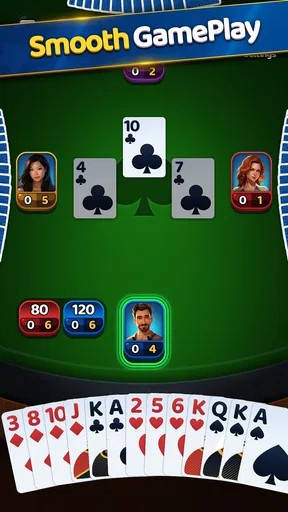
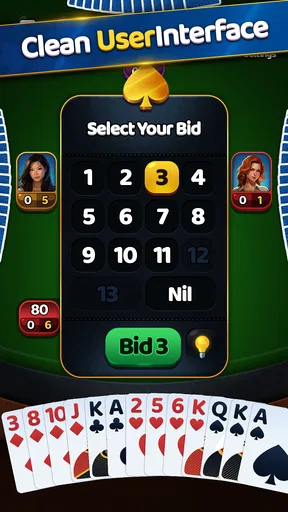

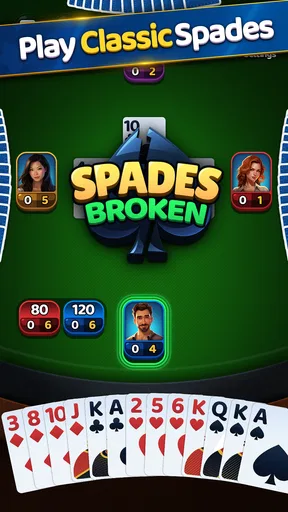
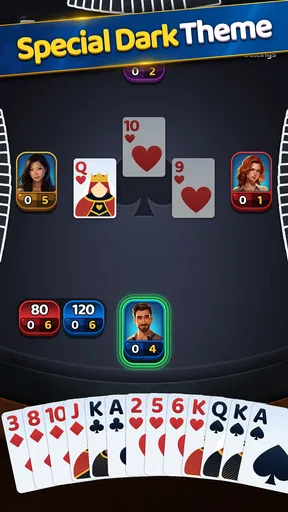
Our Review of Spades: Card Game
 Analysis by Appyee
I spent time with Spades: Card Game as a straightforward way to play the classic trick-taking game on a phone. It is a free card game from Purple Owl Interactive, built around the familiar Spades rules rather than a large collection of unrelated modes. That focus is its main appeal: if you already know how bidding, partnerships, tricks, and spades work, you can get into a hand quickly without learning a new system first.
My overall impression is positive, but with an important qualification. This is best viewed as a convenient digital card table, not automatically as a replacement for playing with people you know. The experience suits short sessions, casual practice, and anyone who wants Spades available whenever a physical deck is not. Players looking for a broad social platform, deep progression, or a highly documented competitive environment should approach it more carefully.
A familiar card table with a practical focus
The game sits in the card category and keeps its identity simple. The store description presents it as a way to outsmart opponents while enjoying Spades in a friendly setting, and that matches the basic reason I would install it: I want to play Spades, not spend several minutes navigating a complicated game hub.
The opening appeal is especially clear in an everyday situation. Imagine having ten minutes before an appointment, sitting on a train, or taking a break when nobody nearby is ready for a card game. A physical deck is inconvenient in those moments, while a digital table is immediately available. I found that the format works well for filling small gaps in the day because a single hand has a natural beginning and end.
That convenience does not remove the need to think. Spades is still about reading the cards, estimating how many tricks a hand can support, and deciding whether a safe bid is better than an ambitious one. The app gives that familiar decision-making a compact home, which is more valuable than flashy presentation for players who already enjoy the rules.
The game is free, and it carries an Everyone content rating. It also supports devices running Android version 6.0 or later. Those details make it approachable for people using older compatible phones, families looking for a simple card title, and anyone who does not want to commit money before deciding whether the digital format suits them.
Purple Owl Interactive has kept the product recognizable rather than presenting it as an entirely new card concept. That is good news for a returning Spades player. I could concentrate on the hand instead of translating unfamiliar terminology or learning a new resource system before making meaningful decisions.
What the first sessions reveal
The first useful test is not whether you can win immediately. It is whether the game gives you enough room to understand why a hand succeeded or failed. In Spades, a lost round can come from an optimistic bid, a partner’s unexpected play, poor timing with high cards, or saving a trump card for too long. I recommend treating the opening sessions as observation time rather than chasing a perfect score.
One practical habit helped me more than simply playing quickly: before bidding, I mentally separated guaranteed tricks from possible tricks. A strong spade may be reliable, while a side-suit ace can be dangerous if another player has a longer suit or if the lead changes at the wrong moment. This makes the game more useful as a thinking exercise and prevents the familiar mistake of counting every attractive card as a certain winner.
Another small but important habit is to remember which suits have already been weakened. Once players begin failing to follow a suit, spades become more powerful because those players can use them to cut in. I paid closer attention to that transition instead of treating every spade as equally valuable. That shift is where a casual hand becomes genuinely strategic.
Progress without letting the score control the session
Card games can create pressure even when they are designed for relaxation. A bad bid may put you behind, and being behind can tempt you into a second bad decision. I found it useful to set a simple personal limit: after two rushed bids, I would stop trying to recover everything in one hand and return to counting only what was realistically available.
This matters because Spades rewards discipline more than dramatic comebacks. If your partnership is already ahead, a conservative bid can be more valuable than a spectacular attempt to collect extra tricks. If you are behind, the right response is not always to bid aggressively; sometimes the better move is to reduce the chance of a severe penalty and wait for a stronger deal.
I would not choose this game if you need a long-term progression system to stay interested. The verified store information establishes the card-game format, but it does not establish a detailed ladder, unlock structure, reward economy, or other progression mechanics. I therefore judge it primarily by the quality of its hands and the convenience of its format, not by promises of an extensive advancement system.
That distinction also helps with spending expectations. The game is listed as free, but the available facts do not establish a purchase model, optional payments, or whether any particular items can be bought. I would install it expecting access to a free card game, while avoiding assumptions about extras until the in-app experience clearly explains them. For readers who want a completely predictable paid-once product, that uncertainty may be a reason to compare alternatives first.
Fairness: what I can judge and what I cannot
Fairness in a digital card game has two separate parts. The first is whether the rules and card distribution feel consistent. The second is whether opponents, partners, and any competitive systems create a level playing field. From normal play, I can evaluate my own decisions and the visible results of hands, but I cannot responsibly turn a few sessions into a claim about hidden dealing logic or matchmaking quality.
My advice is to look for repeatable patterns rather than reacting to one unlucky deal. Spades naturally produces swings, and a hand that feels impossible may simply contain a poor bid or a partnership mismatch. Keep track mentally of whether your losses come from bad cards, overbidding, failing to protect a partner, or misjudging when to spend a trump. That review is more useful than assuming the game was unfair after a single collapse.
Partnership play adds another layer. A digital partner cannot communicate in the same subtle way as a friend across a table, so you have to infer intentions from the bid and the cards played. I found that the most reliable approach was to avoid expecting the partner to rescue an uncertain plan. Bid according to your own hand, leave room for the partnership total to make sense, and treat unusual plays as information rather than personal mistakes.
Players who want a serious competitive environment should be cautious about what they expect. The rating shown for the game is a 4.6 average from around 5.7 thousand ratings, with 267 written reviews, and the title has passed 100 thousand installs. Those figures suggest that the app has attracted a meaningful audience, but popularity alone does not prove that every competitive detail is transparent or that opponents are balanced for tournament-level play.
For me, the fair way to approach it is as a casual-to-focused card experience. Enjoy the strategic challenge, but do not attach real-world status to every result unless the app itself clearly provides the competitive structure you need. If you require detailed rankings, organized events, extensive player controls, or independently verifiable competitive rules, a dedicated Spades community may be a better fit.
The small decisions that make hands more rewarding
One non-obvious lesson is that bidding should be treated as a partnership forecast, not a description of your hand in isolation. A hand with several medium cards may produce more tricks than expected if the suits break favorably, but relying on that possibility can expose both players. I preferred bids that remained sensible even when the hand developed unfavorably.
A second lesson concerns low spades. New players often see every spade as an immediate weapon, but a low trump can be more valuable when it is used to take a trick that would otherwise be lost. Spending it early simply because the suit is powerful can leave you without a way to control a later trick. I tried to preserve at least one flexible option whenever the hand allowed it.
A third useful workflow is to review the final trick count before starting another hand. I asked myself three questions: which trick did I assume was safe, which card forced me to use a spade, and whether my bid matched the actual shape of the hand. This takes less time than replaying the whole round and gradually makes the next bidding decision more deliberate.
There is also a trade-off between speed and learning. Fast play is convenient during a short break, but it can hide the reason behind a loss. When I had time, I slowed down at the bidding stage and before leading a new suit. Those two pauses produced more improvement than trying to play every trick as quickly as possible.
Who should install it, and who should skip it
I would recommend this game to someone who already enjoys Spades and wants a readily available digital version. It is also suitable for a player relearning the rules, a casual card fan who likes short strategic sessions, or a family member using a compatible older Android device. The Everyone rating makes it broadly approachable, although younger players may still need help understanding partnership bidding and trick control.
I would be less enthusiastic for someone who dislikes repeated card rounds or finds luck frustrating. No digital presentation can remove the uncertainty built into the deal, and good decisions will not guarantee every hand. The game is also not my first choice for people who mainly want social conversation, because playing against a device does not recreate the humor, pauses, and informal signals of a real group.
It may also be the wrong choice for a player who needs a clearly defined spending policy before opening a game. The title is free, but the purchase details are not established here, so a careful user should inspect the app’s own purchase information before treating it as a fully predictable no-cost experience. That is not a claim that spending is required; it is simply a reason to check rather than assume.
Compared with a physical deck, the advantage is convenience and immediate setup. Compared with a general card-game collection, the advantage is focus: you are not sorting through many unrelated games. Compared with a dedicated online competitive service, the likely appeal is simplicity, while the trade-off is that the available information does not establish the same depth of rankings, social tools, or formal competition.
Device fit, expectations, and unanswered details
The current version is identified as 1129, and Android compatibility begins at version 6.0. For most users, the practical takeaway is to check the operating system before installing, particularly if the phone is older. A compatible device does not automatically mean every screen will feel equally comfortable, so I would also pay attention to card readability and touch accuracy during the first few hands.
One question many readers will have is whether the game is suitable for a quick offline-style session. The sensible answer is to distinguish between wanting a short game and expecting every function to work without a connection. The confirmed product details establish a card game and its platform compatibility, but they do not establish the behavior of every mode under different connection conditions. I would check the app’s own behavior before planning to rely on it during travel.
Another likely question is whether it can replace playing with friends. In my view, it can replace the availability of a deck, not the social experience. If your goal is quiet practice or a few hands alone, it makes sense. If your goal is conversation, custom house rules, and direct control over the table, a physical game or a clearly social multiplayer alternative will serve you better.
Readers may also wonder whether the rating reflects expert-level competition. I would not read it that way. A strong average rating and a substantial install base indicate that many people are comfortable with the app, but they do not tell us that every opponent is equally skilled or that the game is designed for formal tournament preparation. Use it to sharpen everyday card judgement, not as the sole training ground for high-stakes play.
Finally, the free price answers the most basic entry question: you can try it without paying upfront. It does not answer every question about optional purchases or future in-game costs. I prefer that users make the first session with a clear boundary: play for the card experience, review any purchase prompts carefully, and spend only if the terms make sense to them.
My trust verdict after playing
I came away seeing this as a focused, accessible Spades option rather than an all-purpose gaming platform. Its strongest quality is that it respects the core appeal of the card game: every bid has consequences, every lead reveals information, and a modest hand can still reward careful planning. That is enough to make short sessions worthwhile.
Its limitations are mainly about expectations. I would not assume a deep progression system, a fully social table, or a rigorously documented competitive environment unless the app itself demonstrates those elements. I would also keep spending decisions separate from enjoyment of the free entry point, because the available purchase context does not establish more than that initial price.
After around 100 thousand installs, the game has clearly found an audience, and its 4.6 average gives a helpful signal that the basic experience works for many players. I still recommend judging it by your own preferred style: relaxed hands, deliberate bidding, and occasional practice suit it well; strict tournament preparation and rich social interaction may point elsewhere.
My recommendation is to try it if you want Spades first and extra systems second. Start slowly, count realistic tricks, watch how suits disappear, and review your bids instead of blaming the deal. If that compact rhythm is what you want from a phone card game, Purple Owl Interactive’s version is an easy one to consider. If you need guaranteed social play, transparent competitive depth, or fully explained spending before you begin, compare it with a more specialized alternative.
In short, I would keep it installed for casual and thoughtful sessions. It does not need to reinvent Spades to be useful; it needs to make the familiar decisions convenient, and that is where it earns its place.
Verdict
Strengths of Spades: Card Game
- Clear rules and helpful tutorials make it easy for beginners to start.
- Offline play lets you enjoy matches without Wi-Fi or mobile data.
- Quick rounds fit well into short breaks or casual gaming sessions.
- Adjustable difficulty offers a challenge for both new and experienced players.
- Simple card controls make bidding and playing cards feel smooth on mobile.
Limitations of Spades: Card Game
- Computer partners can make questionable plays at higher difficulty levels.
- Ads may interrupt the experience, especially between completed rounds.
- Limited variation can make matches feel repetitive after extended play.
- Some features or modes may require in-app purchases to unlock fully.
- Strong reliance on bidding strategy may frustrate players who prefer faster games.
Similar Picks in This Category
View All
Solitaire - Classic Card Games
MobilityWare4.6

UNO!™
Mattel163 Limited4.3

Spider Solitaire: Card Games
MobilityWare4.6

Solitaire.com - Classic Cards
Tripledot Studios Limited4.7

Plants vs. Zombies™ Heroes
ELECTRONIC ARTS4.1

Hearthstone
Blizzard Entertainment, Inc.4.1
Frequently Asked Questions
What is Spades: Card Game, and how is it played?
Spades: Card Game is a digital version of the classic trick-taking card game for Android and iOS. You play with a standard 52-card deck, usually in teams, and predict how many tricks you expect to win. Spades are always trump, meaning they can beat cards from other suits. The app generally handles dealing, scoring, bidding, and turn order automatically.
Can I play Spades: Card Game offline?
Many versions of Spades: Card Game offer offline play against computer-controlled opponents, which is useful when you do not have an internet connection. However, features such as online multiplayer, leaderboards, daily challenges, advertisements, cloud synchronization, or account-based rewards may require internet access. Check the specific app listing because offline availability can vary between editions and updates.
Does Spades: Card Game support multiplayer with real people?
Depending on the version you download, Spades: Card Game may include online multiplayer, private rooms, matchmaking, or local play options. Online games can be more competitive because you face real players instead of predictable computer opponents. Before installing, review the multiplayer description and privacy requirements, since some features may require an account, an internet connection, or access to platform services.
Is Spades: Card Game free to download and play?
Spades: Card Game is commonly available as a free download, but the free version may be supported by advertisements or include optional in-app purchases. Paid items can include ad removal, cosmetic themes, extra game modes, coins, or other bonuses. The core card game is often playable without spending money, although some advanced features may be limited until you upgrade.
Is Spades: Card Game suitable for beginners?
Yes, Spades: Card Game can be suitable for beginners, especially when it provides tutorials, rule explanations, adjustable difficulty, and practice games against computer opponents. New players should learn how bidding works, when spades can be played, and how nil bids affect scoring. Some versions may use different house rules, so review the settings before starting competitive matches.
Play our best games!


